

Bamboo, renowned for its strength and durability, stands as a versatile and eco-conscious material choice. Whether you’re planning a construction project or simply looking to preserve bamboo for various uses, it’s crucial to follow the right steps for treating bamboo effectively. In this comprehensive guide, we will walk you through the entire process, from selecting the right bamboo to preparing the treatment solution and achieving the best results.
Step 1: Preparing the Bamboo
Before diving into the treatment process, you must properly prepare your bamboo poles. This initial step is critical for ensuring the success of the treatment. Here’s a comprehensive guide to help you embark on this journey:
1.1 Selecting Mature Bamboo Poles

To achieve optimal results, select mature bamboo poles aged between 3 and 5 years old, although this can vary based on the specific bamboo species. The hardening process that occurs as bamboo matures makes older poles less receptive to the treatment solution. Refrain from using young bamboo, as its structural integrity is not yet suitable for construction purposes.
1.2 Inspecting for Cracks
Carefully inspect each bamboo pole for any signs of cracks or insect damage. It’s crucial to select only those poles that are completely free of defects for the treatment process. Additionally, washing the harvested bamboo poles to remove any mold or dust is a recommended practice.
1.3 Puncturing Bamboo Nodes

Securely fasten the bamboo poles to a stand or table. Employ an iron rod to carefully puncture the bamboo nodes or diaphragms, ensuring you leave the last node intact. This puncturing process facilitates the thorough penetration of the treatment solution into the bamboo. Remember to mark the last node to avoid accidentally puncturing it.
1.4 Handling Longer Poles
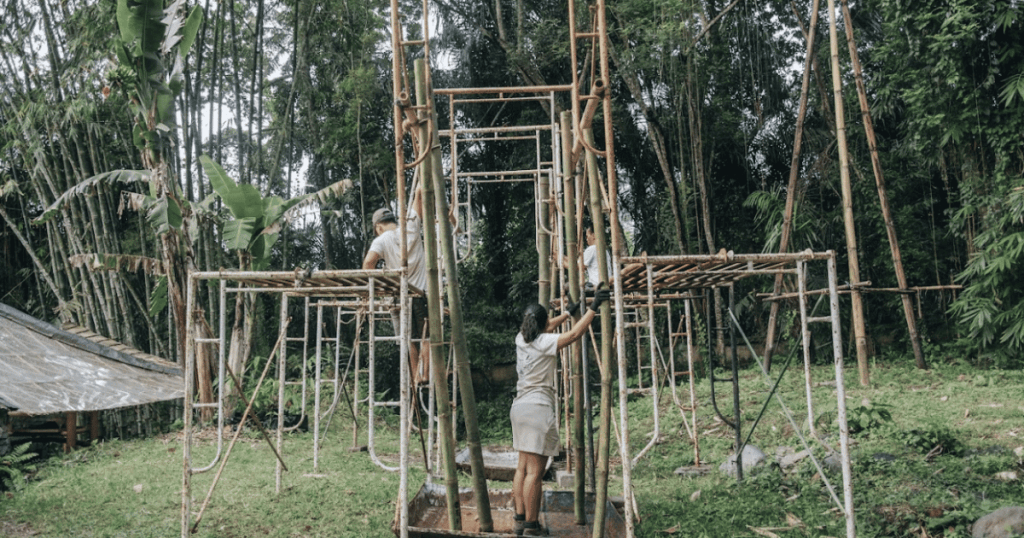
If you’re dealing with taller bamboo poles, consider using a scaffold or placing them on a steep hill to reach the top. This ensures that the treatment is applied uniformly. See the diagram below for an illustration of using scaffolding for taller bamboo poles:
By adhering to these steps, you’re establishing a solid groundwork for achieving effective bamboo treatment.
Step 2: Preparing the Solution
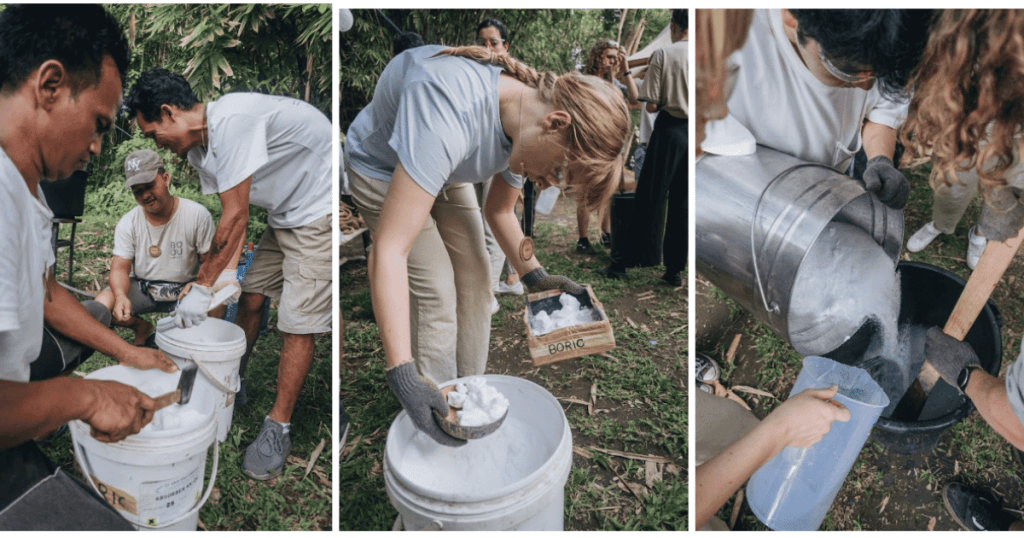
The core of successful bamboo treatment lies in the solution itself, which comprises two key components: borax and boric acid. These substances offer low toxicity, environmental friendliness, and safe disposal into groundwater. To create this solution, adhere to these steps:
2.1 Calculating Solution Volume
Calculate the volume of the solution needed by measuring the length and internal diameter of your bamboo poles. Use the following formula:
V = π x r x r x h
Where:
- V: Volume of the cylinder (in milliliters)
- π: A constant value of approximately 3.14
- r: Radius of the bamboo pole (in cm)
- h: Height or length of the bamboo pole (in cm)
Once you have this data, you can calculate the required solution volume. For example, if you have four bamboo poles, each with a length of 1500mm and an average internal diameter of 50mm, you’d prepare about 15 liters of solution.
2.2 Solution Composition
The solution is composed of 90% water and 10% borax and boric acid, mixed at a ratio of 6:4. Here’s the breakdown:
- 90% Water = 13.5 liters
- 6% Borax = 0.9 liters/kg
- 4% Boric Acid = 0.6 liters/kg
- 100% Solution = 15 liters
Ensure safety by wearing protective gear, including gloves and goggles, when handling borates, as they can cause skin and eye irritation. Warm the water to aid in dissolving the borax and boric acid, and mix until the crystals are completely dissolved.
Step 3: Treating Bamboo

Now, let’s delve into the final steps of bamboo treatment, which involve applying the solution and drying the bamboo poles:
3.1 Applying the Solution
Start by carefully introducing the solution into the bamboo poles. For smaller-scale operations, utilize a funnel and jug, whereas pumps and hoses might prove more effective for larger-scale treatments. Should you encounter any leaks due to holes in the bamboo, promptly repair them using bamboo or wooden pegs.
The bamboo will steadily absorb the borax and boric acid solution, effectively eradicating starch and pests within the poles. The absorption process typically spans approximately 14 days, though this can vary depending on the specific bamboo species. Ensure you replenish the solution daily until the indicator dye, if employed, completely permeates the entire wall thickness of the bamboo.
3.2 Sealing and Drying
To mitigate evaporation, shield the treated poles with caps or suitable sealing materials. If possible, perform this process in a shaded environment to lessen the sun’s impact on the bamboo and reduce solution evaporation.
Following roughly 14 days, puncture the remaining node with a small rod to drain any residual solution, which can then be repurposed for treating additional poles. Subsequently, dry the bamboo in the shade to avert uneven discoloration and cracking.
Upon completing these steps, your bamboo poles are now primed for use in your creative endeavors. If you’re keen to delve deeper into bamboo treatment, propagation, design, and construction, we encourage you to explore our online and in-person programs at Bamboo Supplier. Embark on this journey with us to become a skilled bamboo craftsman.
Contact us:
Tel: +84 338 286 268
Email: [email protected]
Facebook: Bamboo Supplier