
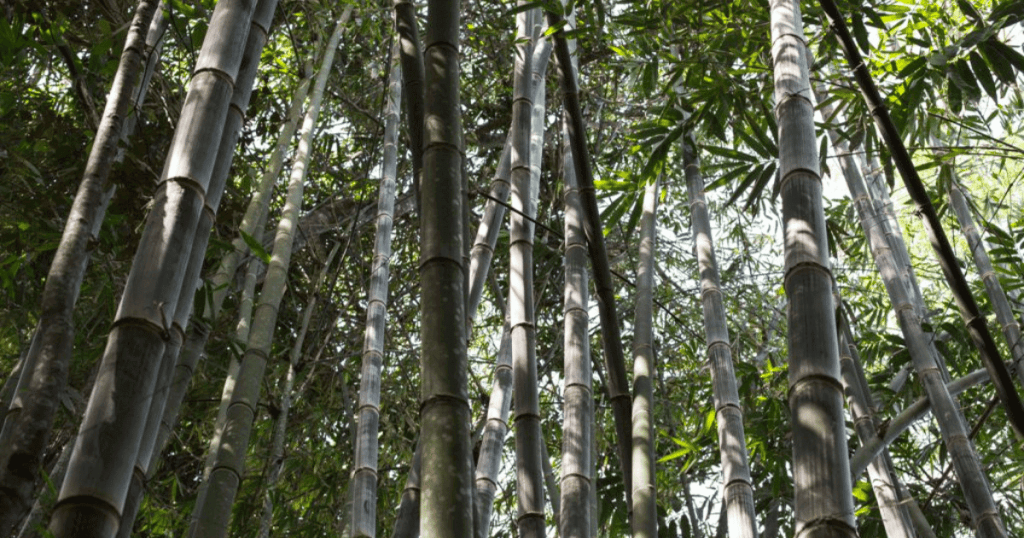
When it comes to bamboo construction with types of bamboo, choosing the right bamboo species is pivotal to the success of your project. With over 1,600 bamboo species identified worldwide, it can be a daunting task to determine which one is best suited for your specific needs. In this comprehensive guide, we will delve into five different types of commonly used bamboo species, each with its own unique advantages, shedding light on how these exceptional plants are shaping the world of construction.
Types of Bamboo – Dendrocalamus asper | Bamboo Petung

Native Habitat: Southeast Asia
Height: Up to 30 meters
Key Characteristics: Strength, straight culms, thick walls
Dendrocalamus asper, also known as Bambu Petung in Bali, is a tropical and subtropical clumping bamboo. It stands as one of the tallest bamboo species, reaching heights of up to 30 meters, with diameters of up to 20 centimeters. This giant boasts an exceptional combination of strength, height, and straight culms, making it an ideal choice for various construction purposes. You can find Bambu Petung gracing the framework of many structures, particularly in the construction of reciprocal towers and columns.
What sets this bamboo apart is its distinguishing feature: small golden-brown hairs on the lower nodes of the culms, adding an elegant aesthetic touch to bamboo buildings. For those looking for a dramatic twist, there’s even a black version of this species, Dendrocalamus asper f. niger.
Gigantochloa apus | Bamboo Tali

Native Habitat: Southeast Asia
Height: Up to 30 meters
Key Characteristics: Flexibility, lightweight
Gigantochloa apus, or Bambu Tali in Bali, is another sought-after species for bamboo construction. This tropical clumping bamboo reaches impressive heights of up to 30 meters, with diameters typically ranging from 4 to 13 centimeters. What makes Bambu Tali stand out is its remarkable flexibility and lightweight culms. In fact, ‘Tali’ translates to “rope” in Bahasa Indonesia, reflecting its utility in crafting bamboo ropes essential for construction purposes.
The long fibers and minimal tapering compared to other bamboo species make Bambu Tali an ideal choice for crafting lightweight structures such as fences, walls, and roofs. Its natural flexibility further adds to its appeal, allowing for the creation of curved and arched structures.
Bambusa blumeana | Bamboo Duri
Native Habitat: Southeast Asia
Height: Up to 25 meters
Key Characteristics: Thick walls, irregularities
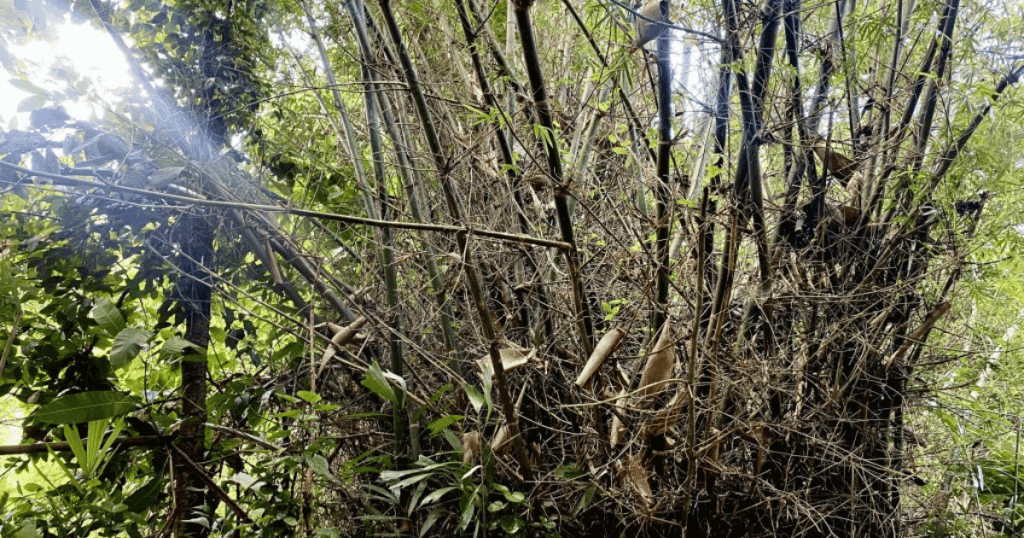
Bambusa blumeana, also known as Bambu Duri in Bali or Thorny Bamboo colloquially, holds a prominent position in the construction industry, especially in regions like Indonesia and the Philippines. This clumping bamboo species can reach heights of up to 25 meters, with diameters of up to 20 centimeters. While it’s considered a medium-sized species, Bambu Duri’s thick walls provide structural integrity.
However, it’s important to note that due to its growth in dense clumps, the culms may not be as straight as in other bamboo species, making harvesting more challenging. Nevertheless, these irregularities, along with swollen nodes, add a visually striking aesthetic feature when the bamboo is cut into slices.
Guadua angustifolia | Guadua
Native Habitat: South America
Key Characteristics: Mix-podial bamboo, strength
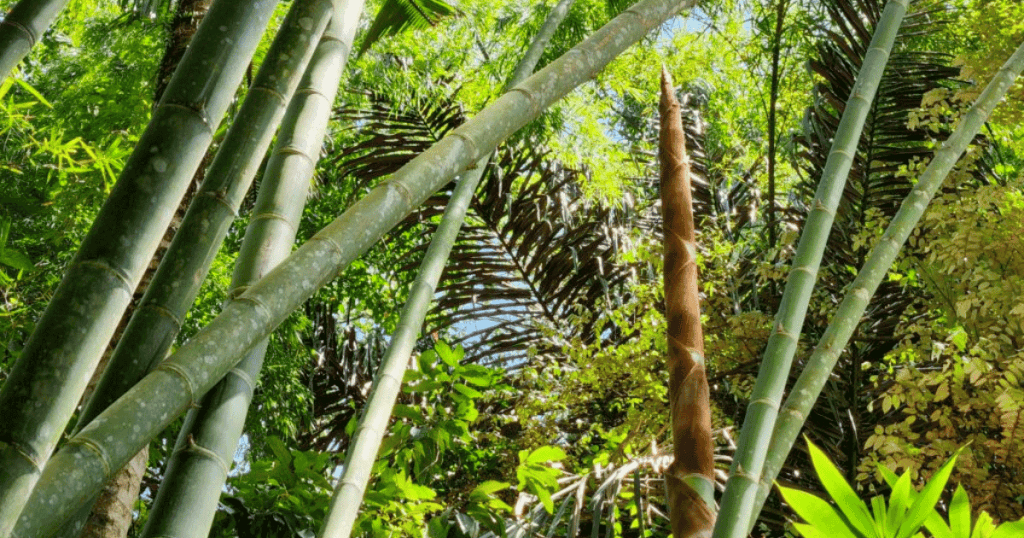
Guadua angustifolia, or simply Guadua, reigns as the reigning champion among bamboo species for construction in South America. What makes Guadua particularly fascinating is its growth pattern as a mix of clumping and running bamboo, known as a mix-podial bamboo. In the case of Guadua, it grows as an open clumper with a spread of up to five meters.
This fast-growing species thrives in tropical climates but can withstand colder temperatures. It’s also one of the tallest bamboo types, often reaching heights of 30 meters with diameters of up to 18 centimeters. To identify Guadua, look for its thick white bands and short stiff hairs on the nodes. Its strength and durability are unmatched in the bamboo world, making it a prime choice for robust construction projects.
Phyllostachys edulis | Moso
Native Habitat: China
Key Characteristics: Fast-growing, running bamboo, fine soft hairs
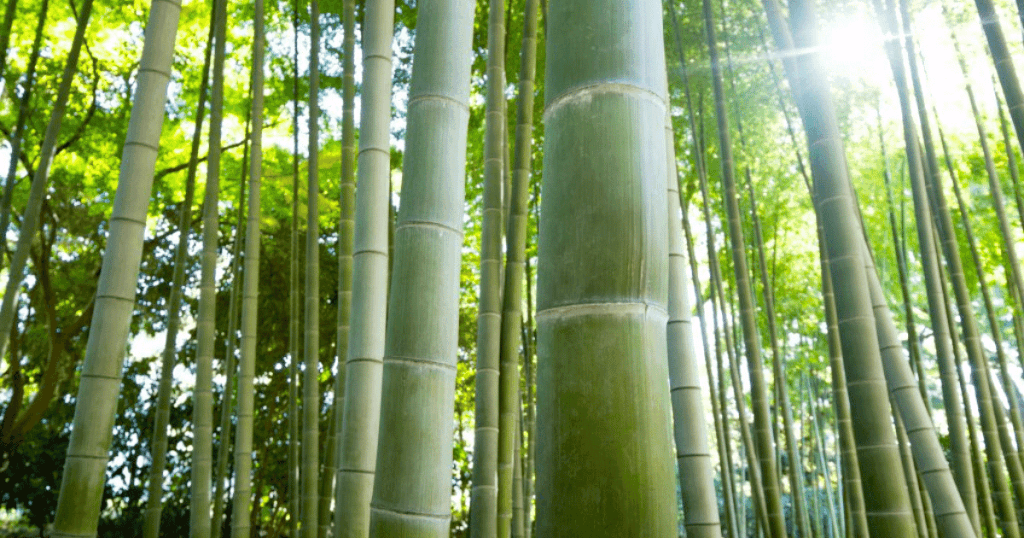
Phyllostachys edulis, also known as Phyllostachys pubescens or Moso bamboo, stands as one of the tallest bamboo species globally and is the primary choice for construction in China. It’s a fast-growing bamboo that can rapidly spread over a large area, although this characteristic can make it invasive in certain contexts. Moso thrives in warm, humid climates but can withstand temperatures as low as -20°C. It can grow up to 23 meters tall, with diameters ranging from 8 to 18 centimeters, making it highly suitable for heavy construction projects. Look for fine, soft hairs growing on its culms and the two branches that sprout from each node, which are telltale signs of this bamboo species.
From the flexible and lightweight Bambu Tali used in Bali to the robust and durable Guadua in South America, each bamboo species brings its own unique characteristics to the table. The choice of bamboo for your construction project should be a carefully considered one, tailored to your specific needs and local availability. The world of bamboo construction is as diverse as the species themselves, offering an array of opportunities for sustainable and innovative building practices.
Tel: +84 338 286 268
Email: [email protected]
Facebook: Bamboo Supplier