
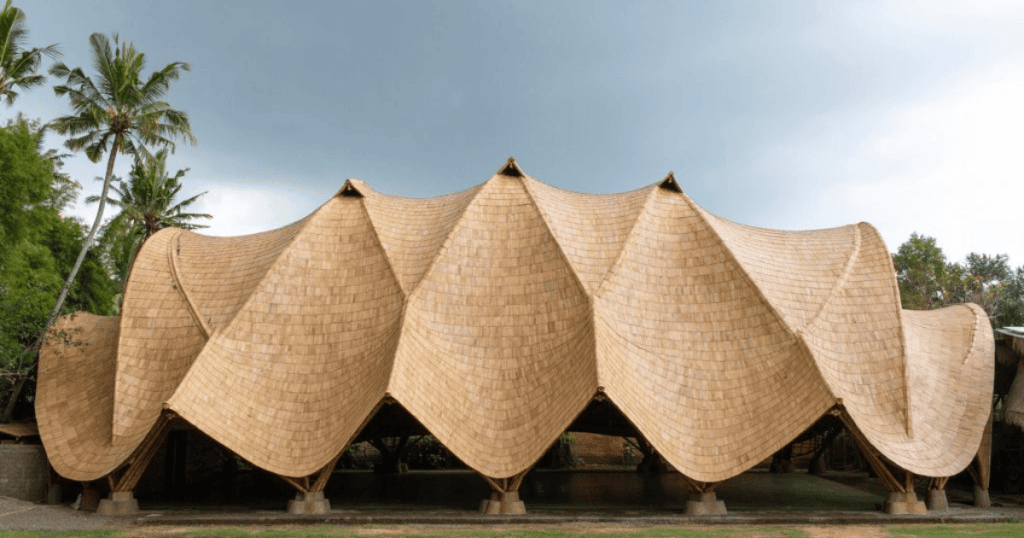
Roofing systems are a fundamental architectural component of bamboo buildings, alongside foundations. Well-designed roofs not only protect the structural integrity of a bamboo edifice but also contribute to its aesthetic appeal and overall user experience. In this comprehensive guide, we delve into the key considerations for creating robust bamboo roofs. We’ll also introduce you to five distinct roofing systems commonly employed in bamboo construction.
The Essentials of a Well-Designed Bamboo Roof
A well-designed bamboo roof encompasses several crucial elements:
1. Overhangs
Overhangs are vital to shield bamboo poles from direct sun and rain, preventing weathering and extending the life of the structure.
2. Roof Pitch
The roof’s pitch is essential for proper water runoff, ensuring that rainwater flows off the roof effectively.
3. Rafter Spacing
The spacing between rafters is essential for structural rigidity, preventing the roof from sagging.
4. Choice of Material
Selecting the right roofing material is paramount to the roof’s durability and overall performance.
Now, let’s explore the five roofing systems commonly used in bamboo construction.
1. Thatched Roofing
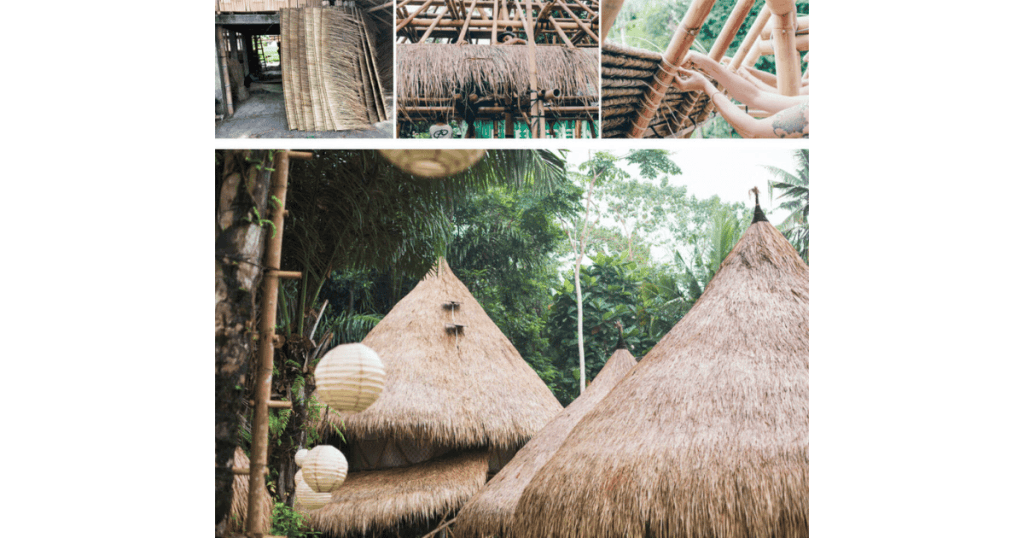
Thatched roofing is one of the oldest and most traditional roofing systems used for bamboo buildings. It involves layering dry vegetation, such as straw, water reed, or palm fronds, to create a waterproof and insulating layer. Thatched roofs provide excellent insulation, keeping the interior cool in hot weather and warm during colder months. They are also visually stunning, giving your bamboo building a rustic and timeless charm. To enhance the roof’s longevity, it’s crucial to maintain and replace the thatch when necessary.
2. Bamboo Shingle Roof
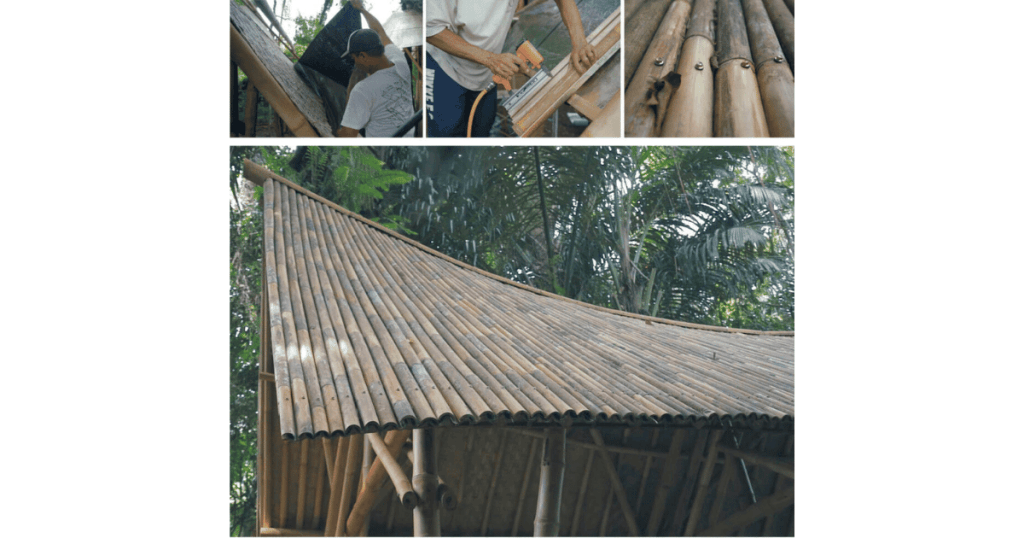
For those who want to maintain the natural beauty of bamboo while ensuring robust protection, a bamboo shingle roof is a perfect choice. These shingles are crafted from split bamboo and provide an attractive and environmentally friendly roofing option. They are durable, resistant to pests, and require minimal maintenance. Bamboo shingles can be used in combination with other roofing materials to enhance their waterproofing capabilities, making them a versatile choice for various climates.
3. Terracotta Tile Roof
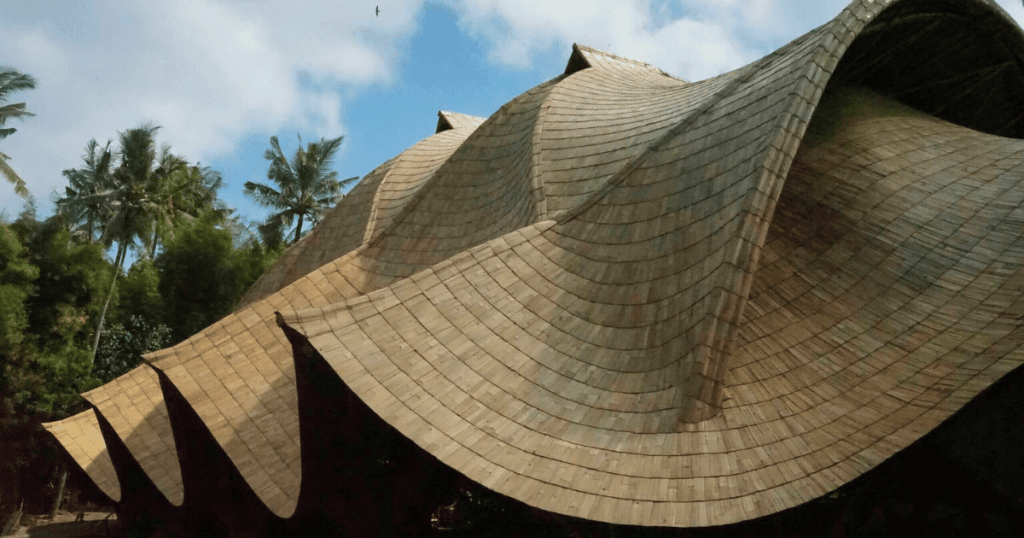
A terracotta tile roof is a type of roofing system that utilizes terracotta clay tiles as the primary roofing material. Terracotta is a type of clay that is molded and fired at high temperatures to create durable and weather-resistant roofing tiles. Terracotta tile roofs are known for their distinctive reddish-brown color, although they can come in various other shades as well.
Here are some key characteristics and advantages of terracotta tile roofs:
- Durability: Terracotta tiles are highly durable and can last for many decades if properly maintained. They are resistant to rot, pests, and fire.
- Aesthetic Appeal: Terracotta tiles have a timeless and elegant appearance that can enhance the curb appeal of a building. They are often associated with Mediterranean and Spanish architectural styles.
- Insulation: Terracotta has natural insulating properties, helping to regulate indoor temperatures and reduce energy costs.
- Low Maintenance: Terracotta tiles require minimal maintenance. Periodic cleaning and inspection are usually sufficient to keep the roof in good condition.
- Resistance to Weather: Terracotta tiles can withstand extreme weather conditions, including heavy rain, wind, and hail.
- Environmentally Friendly: Terracotta is an eco-friendly material because it is natural, abundant, and can be recycled.
- Longevity: Terracotta tiles have a long lifespan, often lasting 50 years or more with proper care.
Terracotta tile roofs are popular in regions with warm and dry climates due to their ability to reflect heat and maintain a comfortable indoor environment. They are often used in Mediterranean, Spanish, and Southwestern-style architecture, but they can be incorporated into various architectural designs.
Installation and maintenance of terracotta tile roofs should be done by professionals with experience in working with this material to ensure the best performance and longevity of the roofing system.
4. Flattened Bamboo Roof
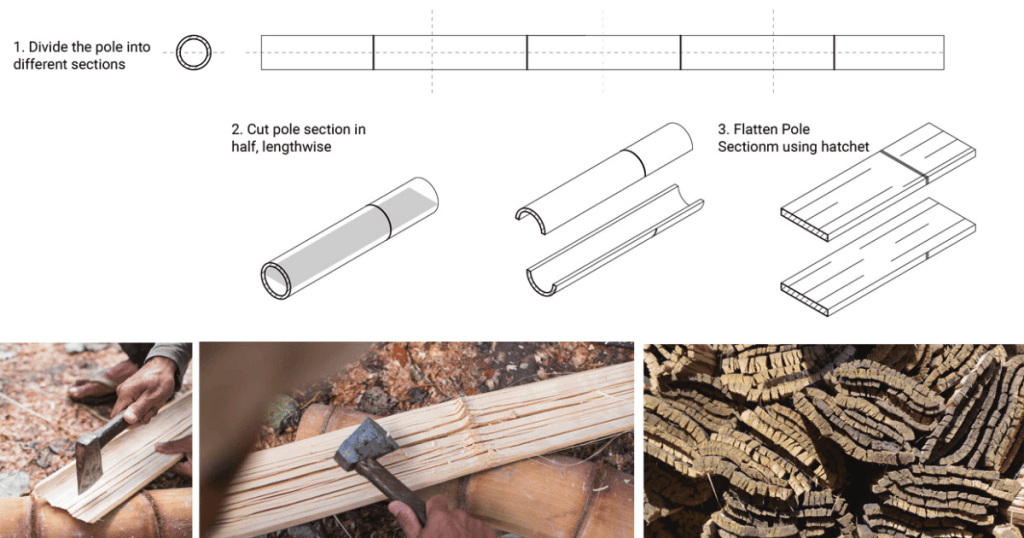
A flattened bamboo roof is not a standard or common term in architecture or construction. It’s possible that you are referring to a roof design or construction technique that incorporates bamboo, but the term “flattened bamboo roof” doesn’t provide enough information to understand what you are specifically asking about.
Bamboo is a versatile and sustainable building material, commonly used in various parts of the world for constructing roofs, walls, and other structural elements. Bamboo roofs can take on various forms, such as thatched roofs, woven bamboo roofs, or shingled roofs. These roofs can be flat, sloped, or curved, depending on the design and purpose.
5. Copper Roof
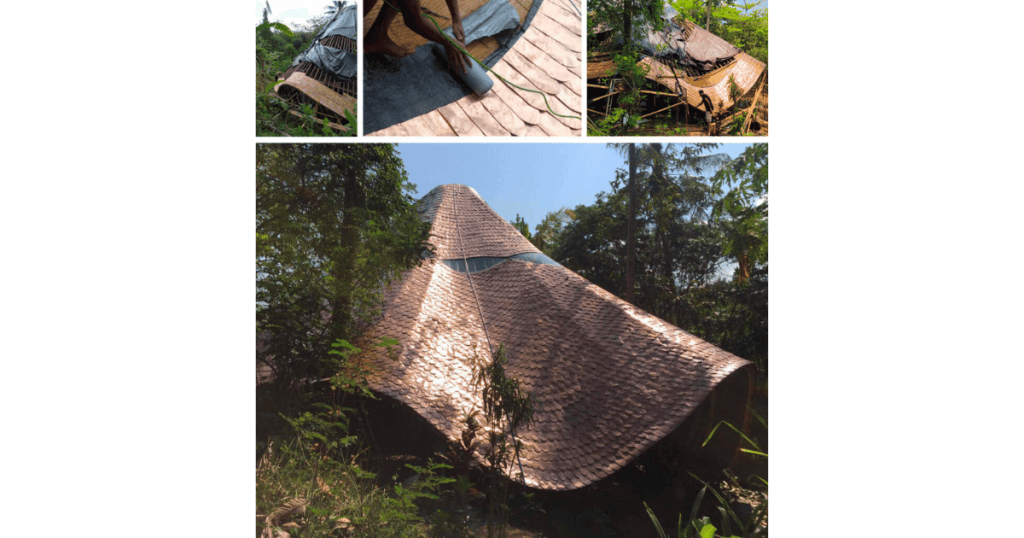
A copper roof is a roofing system made from copper materials. Copper has been used as a roofing material for centuries and is known for its unique characteristics and benefits. Here are some key features of copper roofs:
- Longevity: Copper roofs are renowned for their exceptional durability and longevity. They can last for over a century, far outlasting many other roofing materials.
- Aesthetic Appeal: Copper roofs have a distinct appearance that changes over time. When first installed, they have a shiny, reddish-orange color, but as they weather, they develop a beautiful patina, which can range from brown to green, depending on environmental conditions. This patina adds character and elegance to the building.
- Low Maintenance: Copper roofs require very little maintenance. Regular cleaning to remove debris and occasional inspections are typically all that’s needed to keep them in good condition.
- Weather Resistance: Copper is highly resistant to corrosion and can withstand harsh weather conditions, including heavy rain, snow, and hail. It is also fire-resistant.
- Lightweight: Copper is relatively lightweight compared to some other roofing materials, which can reduce the stress on a building’s structure.
- Eco-Friendly: Copper is a recyclable material, making it an environmentally friendly roofing choice.
- Energy Efficiency: Copper roofs reflect sunlight and heat, helping to keep the building cool during hot weather, which can lead to energy savings.
Copper roofs are often used in high-end residential and commercial construction and are especially popular in historic and architectural restoration projects. Their distinctive appearance and longevity make them an excellent choice for buildings where aesthetics and long-term durability are important.
In conclusion, when it comes to roofing options for bamboo buildings, there are several choices to consider. Each of these roofing systems offers distinct advantages in terms of aesthetics, durability, and eco-friendliness. Your choice will ultimately depend on your specific needs, climate, and budget. Whether you opt for the traditional charm of thatched roofing, the durability of metal, or the eco-consciousness of a green roof, each of these options can help you create a sustainable and beautiful bamboo building that stands the test of time.
Tel: +84 338 286 268
Email: [email protected]
Facebook: Bamboo Supplier