
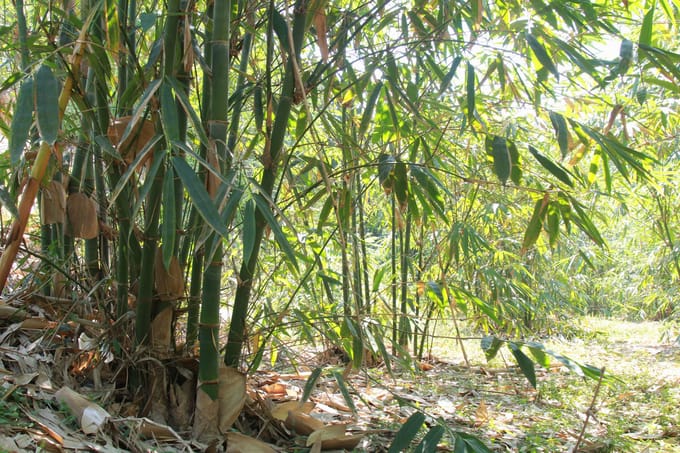
In recent years, various localities in the northern mountainous regions of Vietnam have actively encouraged, guided, and supported people in developing sustainable agricultural and forestry production models. These initiatives not only bring high economic efficiency and improve livelihoods but also contribute to minimizing negative impacts on the environment.
At Yen Bai Province, Bat Do bamboo has been recognized as a model crop for cultivating sloping land. It is well-suited to the farming practices of upland ethnic groups, offering outstanding economic benefits with an average annual income of 70–100 million VND per hectare. Especially notable is its minimal susceptibility to pests, its wide-spreading root system that firmly grips the soil, and the fact that no pesticides are required for cultivation. Furthermore, Bat Do bamboo has proven highly effective in retaining soil and preventing erosion and landslides.
We visited Dong Ruong Hamlet (Kien Thanh Commune, Tran Yen District) in early October, just after a wave of severe rains and floods had caused significant damage in many parts of Yen Bai. The hamlet’s central area lies in a flat valley surrounded by majestic, high mountain ranges. Currently, the hamlet comprises more than 50 households with nearly 270 residents, over 90% of whom are Mong ethnic people. The lives of the villagers here have seen noticeable improvements. Sturdy, well-built houses nestled among dense groves of Bat Do bamboo reflect a sense of prosperity and tranquility.
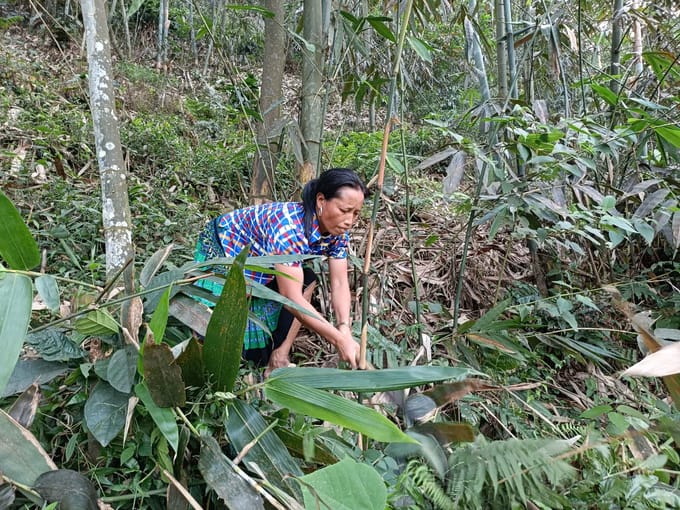
The family of Song Thi Cha started planting Bat Do bamboo in 2010 and now has about 2 hectares. Each year, the family earns nearly 100 million VND from selling bamboo shoots, which has significantly alleviated poverty. According to Cha, the hamlet’s residents used to rely on maize and cassava cultivation, but life was tough, and poverty was widespread. Since the introduction of bamboo, their livelihoods have gradually improved. Bat Do bamboo, once planted, can be harvested for over 20 years. Maintenance requires only occasional grass clearing, pruning of older bamboo, and removal of leaves around the base. During the harvest season, which lasts from July to October, the bamboo groves become a source of stable income.
Currently, Dong Ruong Hamlet has nearly 200 hectares of Bat Do bamboo planted on the surrounding hills, replacing the short-term crops such as rice, maize, and cassava previously grown. In addition to providing a sustainable livelihood, the bamboo groves play a significant role in forest conservation and soil erosion prevention.
Song Thi Pang, another resident of Dong Ruong, shared her thoughts: “I’ve been watching the news on TV and social media about the landslides and floods that have killed many people. It’s terrifying. Living in a valley surrounded by hills and streams, we used to worry a lot. Fortunately, although we’ve had prolonged heavy rains, the hills covered with Bat Do bamboo have not experienced landslides, so we feel much safer.”
Not only in Dong Ruong, but throughout all the hamlets in Kien Thanh Commune, Bat Do bamboo has become the main crop for economic development, with a total cultivation area of approximately 2,000 hectares. Each year, Bat Do bamboo brings over 100 billion VND in income to the people of the commune while also contributing to environmental conservation.
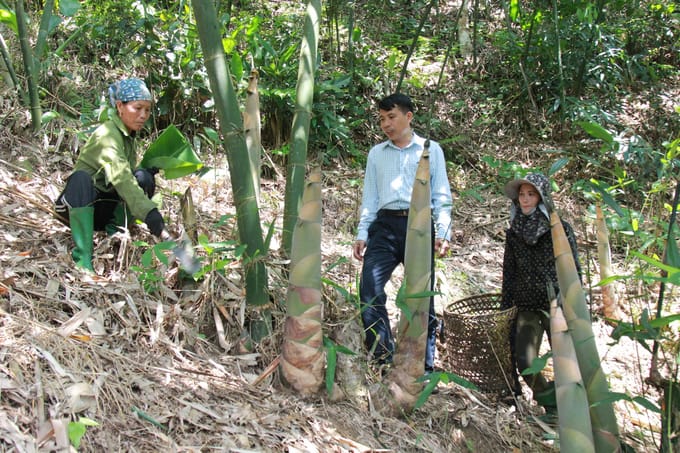
Duong Kim Hung, Chairman of the Kien Thanh Commune People’s Committee, affirmed: “We can now confidently say that Bat Do bamboo has helped transform the lives of people in our commune. Its economic value has been proven over the years. Particularly given the challenging topography of this upland area, with steep slopes and dense streams, the risk of flash floods and landslides is always present.”
Field observations confirm that slopes planted with Bat Do bamboo experience significantly less erosion during stormy seasons, especially on long-established plantations. The extensive and deep root system of the bamboo firmly grips the soil, preventing erosion and landslides. Its thick foliage slows the flow of rainwater, reducing pressure on the soil and lowering the risk of flash floods. Moreover, bamboo’s ability to absorb water helps reduce surface water runoff, further decreasing the likelihood of flooding.
What’s particularly noteworthy is that Bat Do bamboo requires no chemical fertilizers or pesticides. It thrives naturally in its environment, which means it protects the soil from the harmful effects of chemicals often used in other crops.
*Source: Nong Nghiep Viet Nam
*Read more: Poor Communities Transformed Thanks to Bat Do Bamboo Shoots