
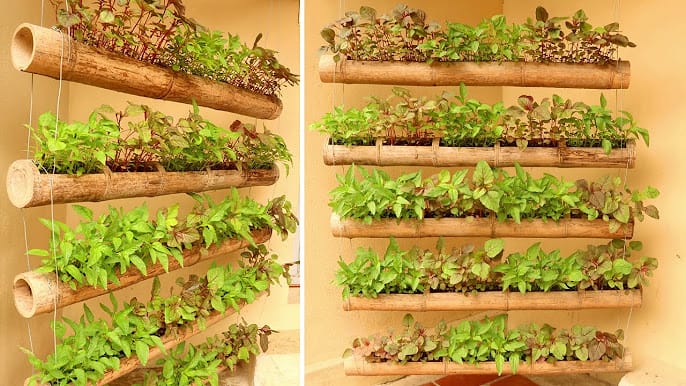
Ever walked past a building covered in green walls and thought—damn, that looks amazing?
There’s something about a vertical garden that just works. It turns empty walls into thriving ecosystems, brings life to concrete-heavy spaces, and makes any area feel fresh and inviting. And the best part? It’s not just for show. These gardens cool down buildings, improve air quality, and create natural insulation, all while looking effortlessly beautiful.
A few years ago, vertical gardens were seen as an aesthetic upgrade—something nice to have if you had the budget. Now? They’re an essential part of urban planning, commercial landscaping, and eco-conscious architecture. But if you’ve ever tried to build one, you’ll know that choosing the right materials is where things get tricky.
Metal frames? They overheat. Plastic? It cracks and discolors over time. Wood? Looks great at first, but warps when exposed to moisture. That’s where bamboo comes in.
Strong, flexible, and ridiculously sustainable, bamboo is redefining how vertical gardens are built. From bamboo trellises that support climbing plants to bamboo fencing that creates structured green walls, this material is proving to be one of the smartest choices for large-scale green projects.
So, if you’re planning a vertical garden that’s built to last, it’s time to rethink the materials you’re using. Let’s talk about why bamboo is changing the future of vertical landscaping.
The Real Challenges In Large-Scale Vertical Gardens & Why Bamboo Is The Solution
At first glance, a vertical garden looks effortless—lush greenery climbing up walls, seamlessly blending into urban spaces. But behind that greenery is a complex structural system, and if the wrong materials are used, what starts as an architectural statement can quickly turn into a high-maintenance burden.
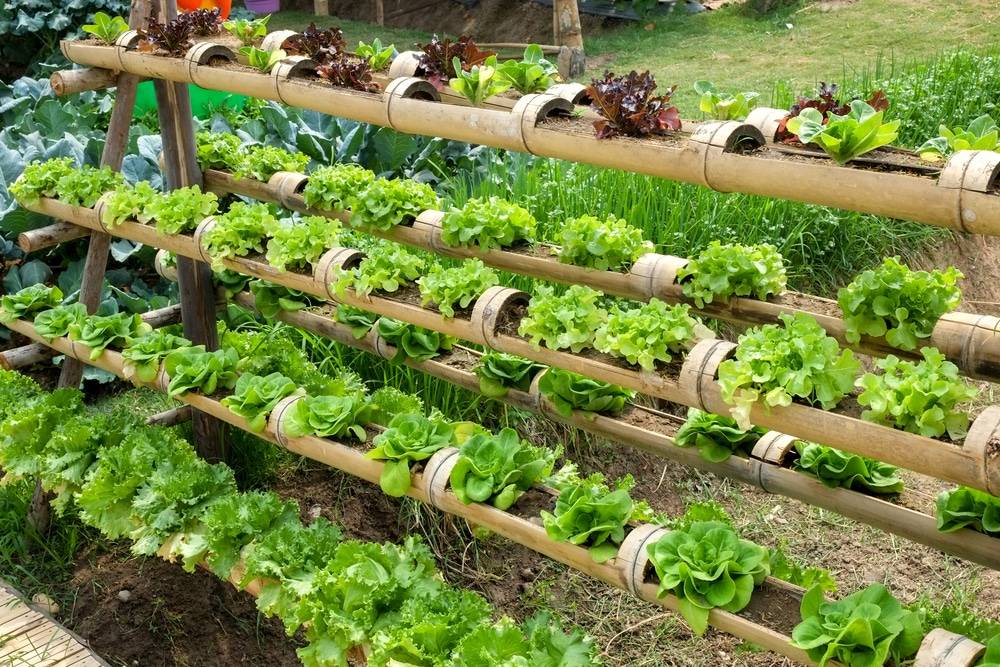
A well-designed vertical garden isn’t just about plant selection—it’s about how well the framework holds up over time. The real challenge isn’t making it look good on day one; it’s ensuring structural integrity, climate adaptability, and long-term sustainability. And that’s exactly where most conventional materials start to fail.
Metal frameworks, though strong, are too heavy, require expensive reinforcements, and absorb heat, which can stress plant roots. Plastic components lack durability, becoming brittle and cracking under prolonged UV exposure. Even treated wood, which initially seems promising, warps and decays when exposed to moisture over time.
For landscaping professionals working on commercial, urban, or large-scale green projects, these material failures translate into higher maintenance costs, frequent replacements, and disappointed clients. That’s why bamboo is emerging as a superior alternative, not just for its aesthetic appeal but for its ability to solve structural, environmental, and longevity issues in vertical gardens.
Structural Load & Durability Issues
A vertical garden isn’t just a collection of plants—it’s a layered system of soil, irrigation, and structural supports, all of which add weight over time. This load puts enormous strain on the underlying framework, which is where most conventional materials start to fail.
Metal is strong but unnecessarily heavy, often requiring additional reinforcements that drive up costs. Plastic, while lightweight, lacks the necessary durability, bending and warping under pressure. Even treated wood, which seems like a solid choice, begins to weaken with moisture absorption, especially in humid environments.
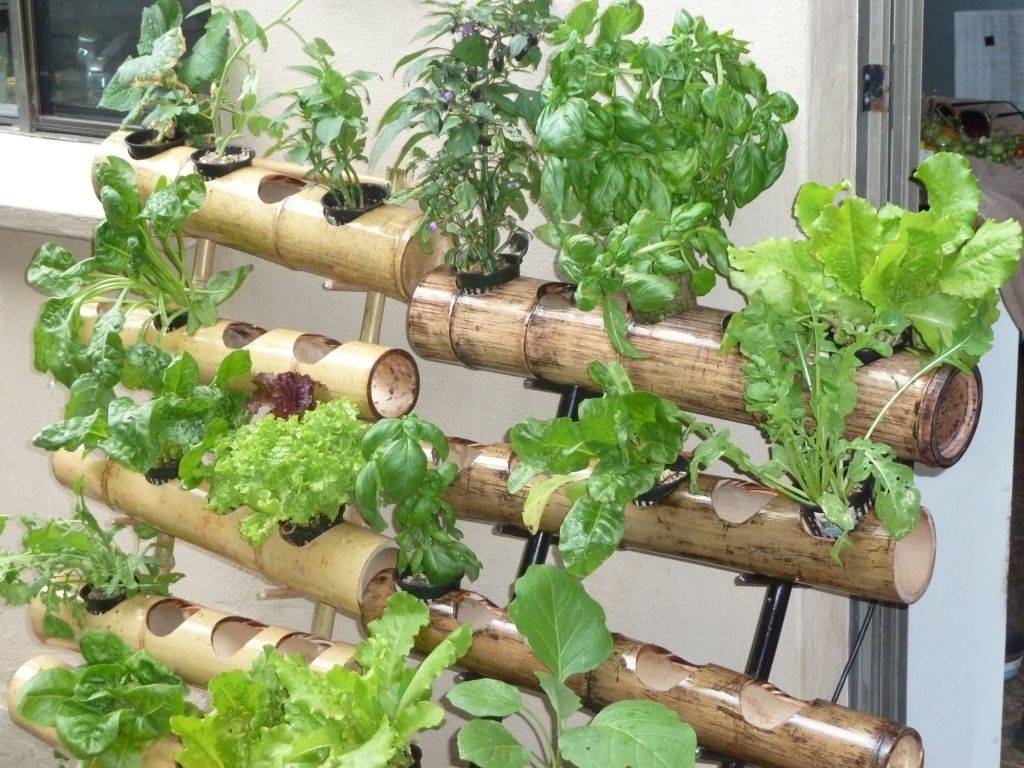
Bamboo, on the other hand, is a high-strength, lightweight alternative that naturally adapts to environmental conditions without compromising on stability. A bamboo trellis system is 30-50% lighter than metal, reducing the structural burden while maintaining the necessary durability. Unlike traditional wood, it doesn’t swell, crack, or warp, making it a practical choice for long-term green wall installations.
For large-scale projects, this means fewer structural modifications, lower material costs, and a garden that stays intact without costly reinforcements.
Metal & Plastic Frames Don’t Blend With The Environment
A vertical garden is meant to bring nature into urban spaces—but that effect is completely lost when it’s built with materials that clash with the natural surroundings. Metal frames, while functional, create an industrial feel that contrasts with the organic aesthetic of the plants. Plastic, on the other hand, ages poorly, fading and cracking under sunlight, making the entire installation look cheap over time.
Bamboo offers a solution that is both structurally effective and visually seamless. It integrates naturally into any environment, whether it’s a high-end commercial landscape or an urban green space. Unlike metal, bamboo doesn’t overheat, meaning it doesn’t contribute to root stress or fluctuating microclimates. Unlike plastic, it retains its structure without degradation, making it an excellent long-term choice.
For designers and architects working on high-profile or premium landscaping projects, bamboo doesn’t just solve a functional issue—it enhances the overall aesthetic, giving green walls a cohesive, natural finish that actually complements the plants they support.
Maintenance & Long-Term Viability
The biggest issue with large-scale vertical gardens isn’t installation—it’s maintenance. What looks great on day one might start to break down within two or three years if the materials aren’t built to withstand constant exposure to moisture, sunlight, and plant growth.
Metal, despite its durability, is prone to rust and corrosion, especially in humid climates or areas with frequent irrigation. Once rust takes hold, there’s no easy fix—the affected sections have to be replaced entirely. Plastic suffers from the opposite problem—it brittles and cracks, especially when exposed to fluctuating temperatures and UV radiation. Wood, while aesthetically appealing at first, requires constant sealing and treatment to prevent it from rotting.
Bamboo fencing and decking, when properly treated, resist water absorption and decay, maintaining their strength for over seven years even in high-humidity conditions. Unlike metal, bamboo doesn’t corrode. Unlike plastic, it doesn’t become brittle. Unlike wood, it doesn’t need constant refinishing.
For large-scale projects, this means fewer replacements, reduced maintenance costs, and a more sustainable investment—without the risk of structural failure over time.
Building a large-scale vertical garden isn’t just about choosing plants—it’s about choosing the right materials that keep the structure stable, enhance its natural appeal, and minimize long-term costs.
Metal is strong but too rigid, heavy, and prone to rust. Plastic is lightweight but deteriorates quickly. Wood has a natural look but requires too much upkeep. Bamboo, however, bridges the gap between all three, offering durability, flexibility, and an organic aesthetic that actually improves with time.
For professionals working on commercial, urban, or large-scale landscaping projects, bamboo isn’t just an option—it’s the most practical long-term investment.
The Right Bamboo Elements For Professional Vertical Gardens
Not all bamboo materials are created equal.
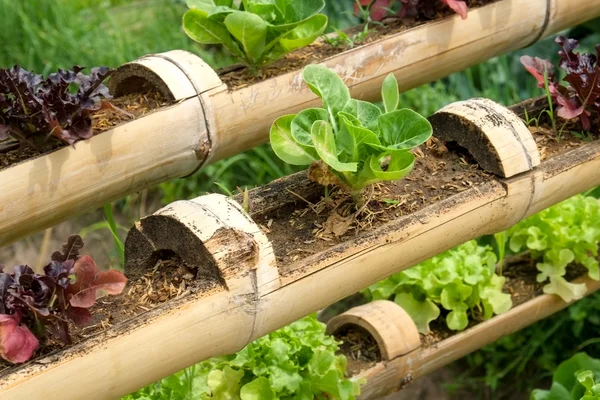
When it comes to large-scale vertical gardens, picking the wrong bamboo can lead to structural failure, rapid degradation, and high replacement costs. Too often, projects fail because they use low-quality, untreated bamboo that warps, molds, or breaks under constant moisture exposure.
For professional buyers—landscape architects, contractors, and green infrastructure developers—the focus isn’t just on finding bamboo at a good price, but selecting the right type, the right treatment, and the right application to ensure longevity and cost efficiency.
Let’s break down what actually works.
Bamboo Trellises – The Foundation For A Lasting Structure
A bamboo trellis serves as the structural backbone of a vertical garden. Without a well-built trellis, climbing plants won’t have the right support system, and the entire green wall can become unstable over time. However, not all bamboo trellises are suitable for large-scale applications.
The key to selecting the right bamboo trellis lies in understanding which bamboo species provide the best durability. Many projects fail because they rely on Moso bamboo, which, while strong, is prone to mold in humid environments. Tonkin bamboo, on the other hand, has a denser fiber structure that allows it to resist moisture absorption and decay, making it a superior option for vertical gardens exposed to frequent misting or irrigation.
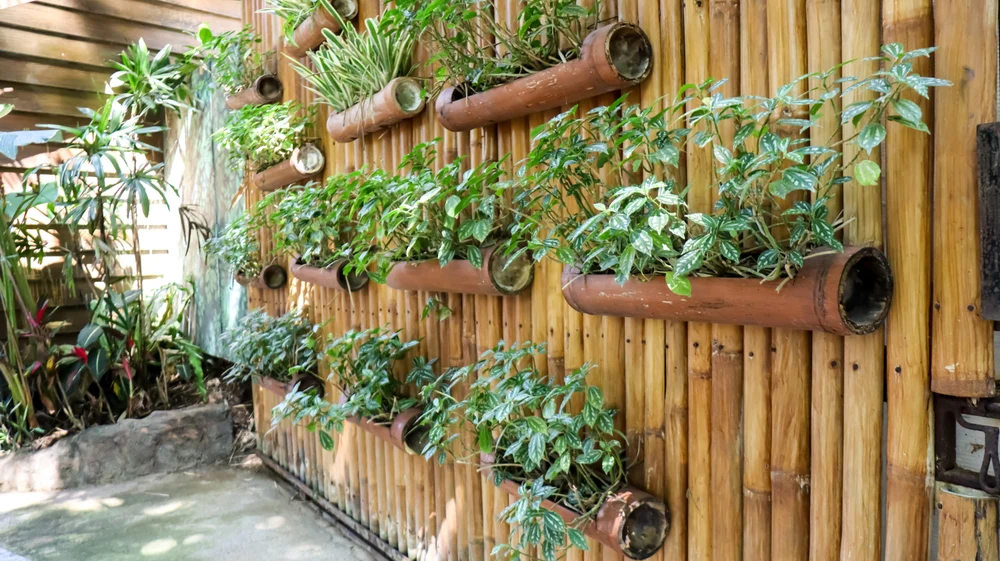
Another common mistake is using bamboo that hasn’t been properly treated. Without heat treatment or pressure curing, bamboo trellises will begin to swell, crack, or weaken after a few seasons. A high-quality trellis must be kiln-dried to stabilize its structure, ensuring that it doesn’t warp when exposed to moisture fluctuations.
For vertical gardens with high plant loads, trellises need to be reinforced at key stress points. A standard trellis might work for small installations, but for commercial or high-rise applications, bamboo should be joined with high-tensile fasteners or laminated for extra strength.
Choosing the right bamboo trellis isn’t just about aesthetics. It’s about ensuring that the structural framework of the garden remains intact for years, minimizing maintenance costs and plant loss.
Bamboo Stakes – The Essential Support For Modular Green Walls
A bamboo stake might seem like a minor component, but in a modular vertical garden, it plays a crucial role in stabilizing root structures, supporting climbing plants, and reinforcing plant sections. Using the wrong type of stake can compromise the entire system.
One of the most common mistakes is selecting untreated bamboo stakes. Without carbonization or waterproof sealing, bamboo absorbs moisture, leading to internal decay, fungal growth, and weakened structure. Many green wall failures happen because stakes degrade faster than expected, causing sections of the garden to collapse.
Another issue is incorrect stake thickness. Stakes that are too thin will bend and snap under plant weight, while those that are too thick reduce flexibility, making it harder for plants to integrate into the modular system.

For professional installations, bamboo stakes need to be carefully chosen based on plant type and environmental conditions. In high-humidity areas, Tonkin bamboo stakes are preferred due to their natural resistance to rot. For heavier plant systems, reinforced bamboo stakes with an outer sealant layer provide additional load-bearing capacity.
Many commercial landscapers now opt for multi-layer bamboo stakes, where bamboo is heat-treated, pressure-sealed, and surface-coated to extend longevity. Unlike untreated bamboo poles that degrade in one to two seasons, properly selected and treated stakes can last five to seven years without losing strength.
In a modular green wall, every component must be built to withstand long-term exposure to moisture, plant growth, and environmental fluctuations. The right bamboo stake ensures that plant support remains strong without requiring frequent replacements.
Everything you need to know about bamboo stakes and their longevity in landscaping.
Bamboo Fencing – Balancing Aesthetic And Structural Function
A bamboo fence in a vertical garden does more than create a visual barrier. It serves as a structural reinforcement while maintaining a natural, cohesive look. But using the wrong type of bamboo fencing can lead to rapid weathering, instability, and increased maintenance costs.
A frequent mistake is choosing bamboo fencing made from immature, untreated poles. Freshly cut bamboo might look appealing at first, but it lacks the density to withstand environmental exposure. Within a short time, it starts to split, fade, and weaken, turning into an eyesore instead of a functional support element.
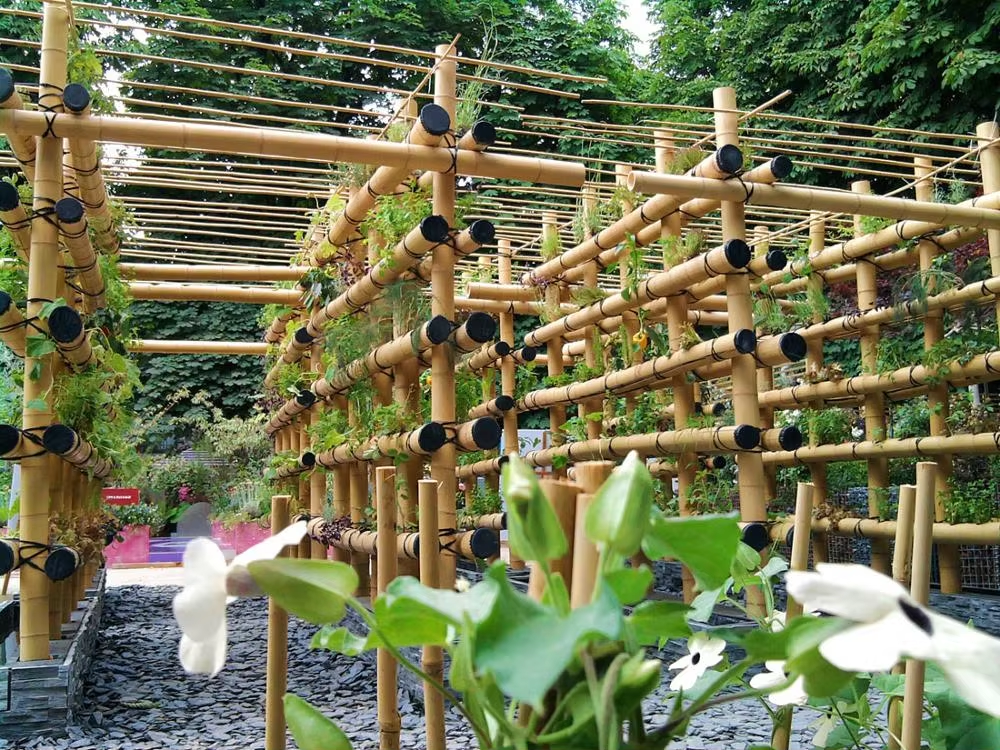
The most effective bamboo fencing for vertical gardens is kiln-dried, laminated, and UV-protected. Kiln drying removes excess moisture, preventing shrinkage and internal decay. Laminated bamboo fencing provides added reinforcement, ensuring that panels remain structurally intact even in high-wind or high-humidity environments.
When integrating bamboo fencing into a vertical garden, professionals should also consider structural reinforcements. Thicker, interwoven panels provide better load distribution, while treated bamboo with water-resistant coatings extends lifespan.
Using high-quality bamboo fencing reduces replacement cycles, making it a more cost-effective long-term solution. Unlike plastic or composite alternatives, bamboo fencing naturally integrates into green spaces, maintaining both functional and aesthetic value.
Bamboo Decking – The Ground-Level Solution For Seamless Integration
A vertical garden is more than just the wall—it’s about how it connects with the surrounding space. That’s why bamboo decking has become a key material for commercial landscaping projects. However, not all bamboo decking is suited for high-moisture environments.
A major issue in green space installations is poor drainage, which leads to water pooling, mold buildup, and unsafe walking surfaces. Low-quality bamboo decking absorbs water, causing swelling, warping, and structural instability. If the decking isn’t elevated for proper airflow, the lifespan of the material is significantly reduced.
The most effective bamboo decking for vertical gardens is strand-woven bamboo, which is compressed and heat-treated for durability. Unlike traditional bamboo planks, strand-woven bamboo is three times denser, making it more resistant to moisture penetration, heavy foot traffic, and climate fluctuations.
To maximize longevity, bamboo decking should be installed with proper subfloor ventilation and anti-slip surface treatments. This prevents moisture retention and ensures that the decking remains safe and structurally sound even in humid conditions.
Why Choosing The Right Bamboo Matters In Vertical Garden Projects
A vertical garden is an investment in long-term sustainability and visual impact. But without the right materials, maintenance costs quickly spiral out of control.
A bamboo trellis that cracks within two years, a stake that rots from within, a fence that collapses under pressure, or a deck that warps after one rainy season—these failures reduce the lifespan of the entire green wall.
For commercial buyers, landscape architects, and contractors, choosing the right bamboo isn’t about finding the cheapest option—it’s about ensuring stability, longevity, and performance.
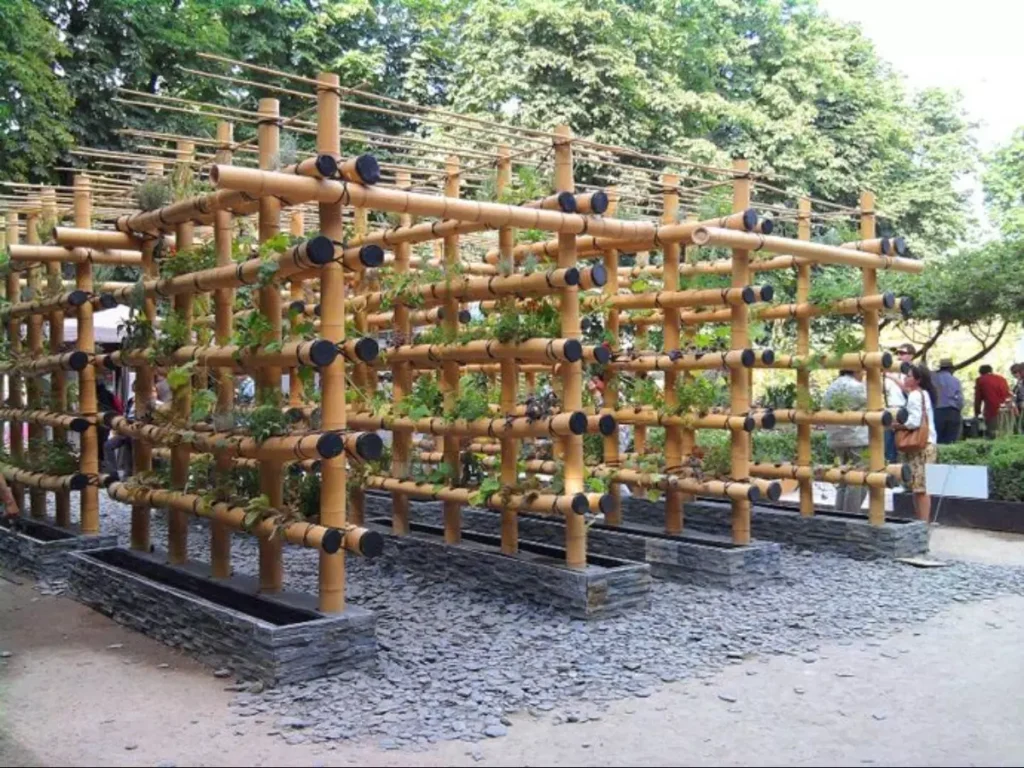
A successful vertical garden doesn’t just look good on day one—it’s built to last for years without excessive maintenance or premature material failure. And that starts with using bamboo that’s engineered for durability, resilience, and functionality.
Conclusion
A vertical garden isn’t just an aesthetic statement—it’s a long-term investment that depends on structural integrity, material resilience, and minimal maintenance costs. Choosing the wrong materials leads to rapid deterioration, increased upkeep, and ultimately, a failed installation.
That’s why bamboo is becoming the preferred solution for large-scale vertical gardens. More than just a decorative element, high-quality, treated bamboo outperforms traditional materials in strength, flexibility, and environmental adaptability. A properly selected bamboo trellis ensures lasting plant support, reinforced bamboo stakes prevent structural failures, bamboo fencing blends aesthetics with functionality, and bamboo decking enhances the space while maintaining durability.
For commercial developers, landscape architects, and green infrastructure professionals, this isn’t just about choosing bamboo—it’s about choosing the right bamboo. Not all bamboo is created equal, and selecting the wrong type can lead to expensive replacements and compromised structural performance.
At Bamboo Supplier, we provide high-performance bamboo materials specifically designed for large-scale landscaping and green infrastructure projects. From moisture-resistant bamboo trellises to reinforced bamboo decking, our products are engineered to ensure that vertical gardens remain structurally sound and visually striking for years to come.
A successful vertical garden isn’t just about the plants—it’s about the foundation that keeps it thriving. Choosing bamboo means choosing a future where durability, aesthetics, and sustainability work together seamlessly.