
The global shift towards eco-friendly and sustainable practices has sparked innovative approaches in architecture and construction. One of the most promising materials leading this transformation is bamboo. Known for its rapid growth and renewability, sustainable bamboo architecture offers an environmentally friendly alternative to conventional building methods. This article delves into the evolution, benefits, challenges, and future prospects of sustainable bamboo architecture, underscoring its importance in modern sustainable development.
The Evolution of Sustainable Bamboo Architecture
Bamboo has been used as a building material for centuries, particularly in Asia, where it is both culturally significant and practical. The evolution of sustainable bamboo architecture showcases a journey from humble, traditional beginnings to a prominent feature in contemporary design.

Historical Significance
In regions such as Southeast Asia, bamboo has been an integral part of construction due to its abundance and affordability. Traditional bamboo structures range from simple homes to intricate temples and bridges, demonstrating the material’s versatility and resilience. For centuries, rural communities relied on bamboo not just for building, but for crafting everyday tools and furniture.
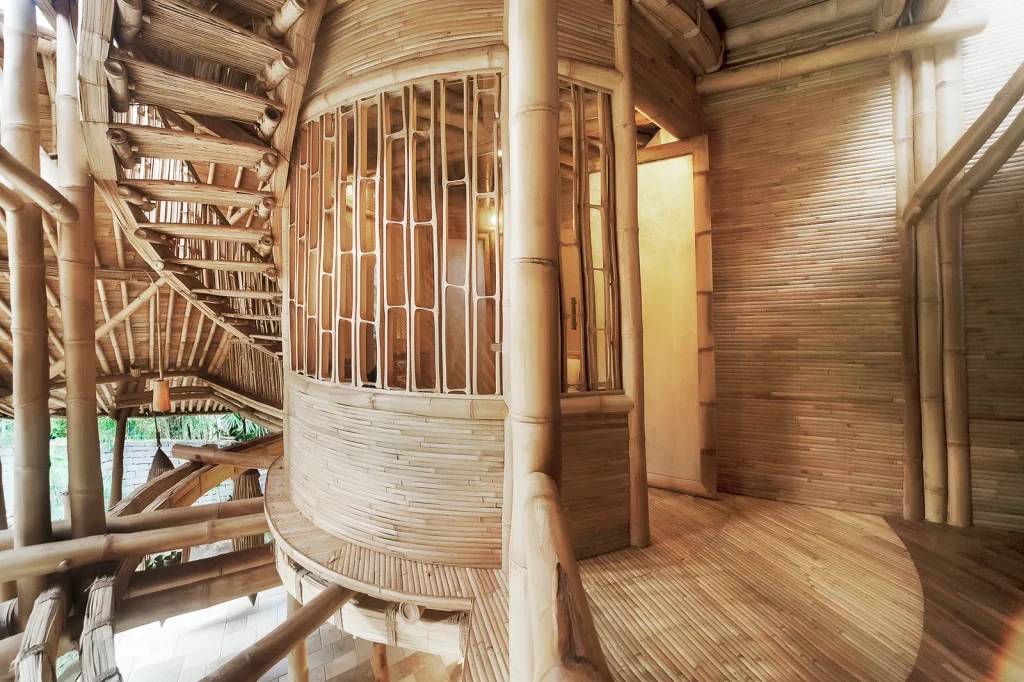
Example: The famous Bamboo Houses of Bali, Indonesia, are a testament to traditional bamboo architecture. These homes are designed with sustainability in mind, using locally sourced bamboo and showcasing intricate craftsmanship.
Modern Resurgence and Global Recognition
The 21st century has seen a revival of sustainable bamboo architecture, propelled by the need for greener building solutions. Modern techniques have enhanced the use of bamboo by reinforcing it to meet global building codes. Today, architects from around the world incorporate bamboo into their projects, blending traditional craftsmanship with modern aesthetics to create sustainable and visually appealing structures.
Case Study: The Bamboo Palace in Vietnam, designed by Vo Trong Nghia Architects, exemplifies the integration of modern design principles with sustainable bamboo practices. This structure not only highlights bamboo’s natural beauty but also demonstrates its potential as a primary building material.
Key Benefits of Sustainable Bamboo Architecture
Bamboo’s unique properties make it an outstanding candidate for sustainable architecture. Here are some of the top advantages of using bamboo in construction:

Rapid Growth and High Renewability
Bamboo is one of the fastest-growing plants on Earth, with certain species capable of growing up to 91 cm (35 inches) in a single day. This rapid growth rate allows bamboo to be harvested every 3-5 years, compared to hardwood trees that take decades to mature. Sustainable bamboo architecture leverages this growth cycle to maintain a steady supply of material without compromising forest health.
Carbon Sequestration Capabilities
Bamboo’s impressive ability to absorb carbon dioxide makes it an essential tool in combating climate change. One hectare of bamboo can sequester up to 12 tons of CO2 annually, which supports global carbon reduction efforts. The incorporation of bamboo into construction projects thus contributes to decreasing the carbon footprint of buildings.
Fact: According to the Food and Agriculture Organization (FAO), bamboo plantations can help mitigate climate change while providing economic opportunities for local communities.
Strength and Durability
Despite its lightweight nature, bamboo possesses a tensile strength comparable to steel and a compression strength rivaling concrete. These properties make bamboo suitable for use in structural elements of buildings, including beams and frames. This strength-to-weight ratio ensures that sustainable bamboo architecture can withstand natural forces such as earthquakes, a significant advantage for construction in seismically active regions.
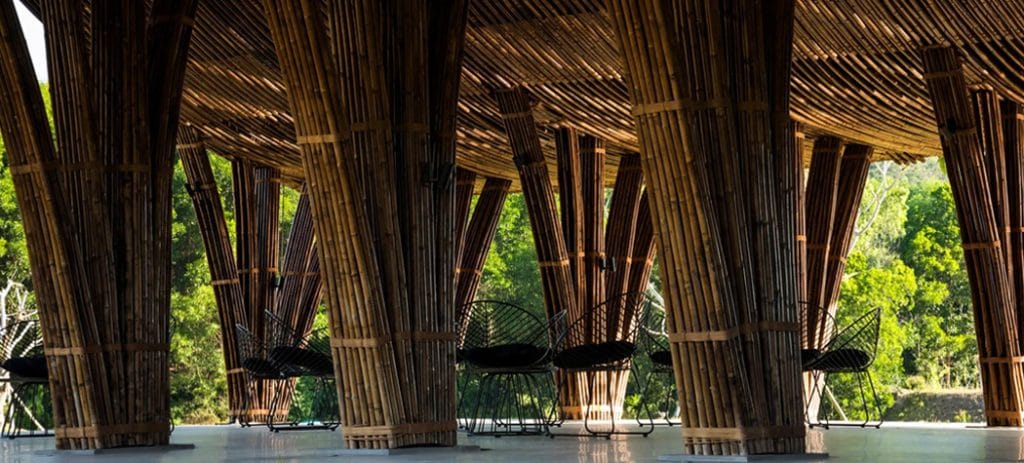
Example: The Bamboo Sports Hall in Lijiang, China, showcases bamboo’s structural capabilities. Designed to host sporting events, this facility has proven to be not only aesthetically pleasing but also resilient to various environmental challenges.
Thermal and Acoustic Insulation
Bamboo’s cellular structure provides natural thermal insulation, which helps maintain comfortable indoor temperatures and reduces the need for artificial heating or cooling. This quality enhances energy efficiency in buildings. Additionally, bamboo has sound-absorbing properties, making it ideal for noise reduction in residential, office, and public spaces.
Research Findings: Studies indicate that bamboo buildings can achieve energy savings of up to 30% compared to conventional structures due to their natural insulation properties.
Environmental Impact of Sustainable Bamboo Architecture
Sustainable bamboo architecture offers a multitude of ecological benefits:
Reduced Energy Consumption
The energy needed for harvesting, processing, and transporting bamboo is significantly lower than that for conventional building materials such as steel and concrete. This reduced energy consumption directly correlates with lower greenhouse gas emissions, contributing to a more sustainable construction process.
Preservation of Natural Forests
Utilizing bamboo helps mitigate deforestation by providing an alternative to hardwoods. This practice protects old-growth forests and supports biodiversity, allowing natural ecosystems to thrive without human interference. The sustainable cultivation of bamboo ensures that forests can continue to serve as habitats for countless species while maintaining their role as carbon sinks.

Illustration: In Brazil, the Green Bamboo Project promotes the cultivation of bamboo for construction and furniture, reducing the demand for hardwood and preserving the Amazon rainforest.
Minimal Waste Production
Bamboo’s versatility allows for the use of nearly every part of the plant. From construction panels and beams to furniture and decorative elements, bamboo’s full potential can be harnessed, minimizing waste. Any leftover material can be recycled or repurposed, aligning with the principles of a circular economy and sustainable resource management.
Example: In rural communities, artisans use bamboo scraps to create handicrafts, which not only reduces waste but also provides economic opportunities for local craftsmen.
Read more: Harnessing All The Best Economic Value of Bamboo 2024
Challenges and Solutions in Sustainable Bamboo Architecture
While the benefits are substantial, sustainable bamboo architecture faces certain challenges that need to be addressed:
Quality Control and Standardization
The quality of bamboo can vary due to differences in growth conditions, such as soil quality and climate. This inconsistency can affect the durability and safety of bamboo structures. To mitigate this issue, international standards and certification processes for bamboo construction are being developed. Research into advanced treatment methods also helps improve the longevity and performance of bamboo as a building material.
Initiative: Organizations like the International Network for Bamboo and Rattan (INBAR) are working to establish global standards for bamboo products to ensure quality and safety in construction.
Vulnerability to Pests and Decay
Bamboo is prone to damage from insects and fungi if left untreated. Modern solutions include eco-friendly treatments that do not compromise bamboo’s sustainability. Methods such as boron-based treatments and kiln drying enhance bamboo’s resistance to pests and decay, extending its lifespan and making it more reliable for long-term use.
Innovation: Researchers are exploring natural preservatives, such as essential oils and plant extracts, to enhance bamboo’s durability while maintaining its ecological benefits.
Limited Public Awareness and Adoption
In many regions, bamboo is still perceived as a material for temporary or low-cost structures. Changing this perception requires educational initiatives that highlight bamboo’s strength, sustainability, and potential in modern architecture. Demonstration projects, government incentives, and media campaigns can play crucial roles in shifting public opinion and promoting wider adoption.
Example: The Bamboo School Initiative in Colombia educates communities about the benefits of bamboo construction, showcasing successful projects to inspire local builders and architects.
Technological Innovations and Sustainable Bamboo Architecture
Technological advancements are propelling sustainable bamboo architecture into new realms of possibility:

Engineered Bamboo Products
Engineered bamboo, such as cross-laminated bamboo and bamboo plywood, has emerged as a game-changer. These products are stronger and more uniform, meeting stringent international building codes. Engineered bamboo allows for the construction of larger and more complex structures, expanding its applications in urban development and public infrastructure.
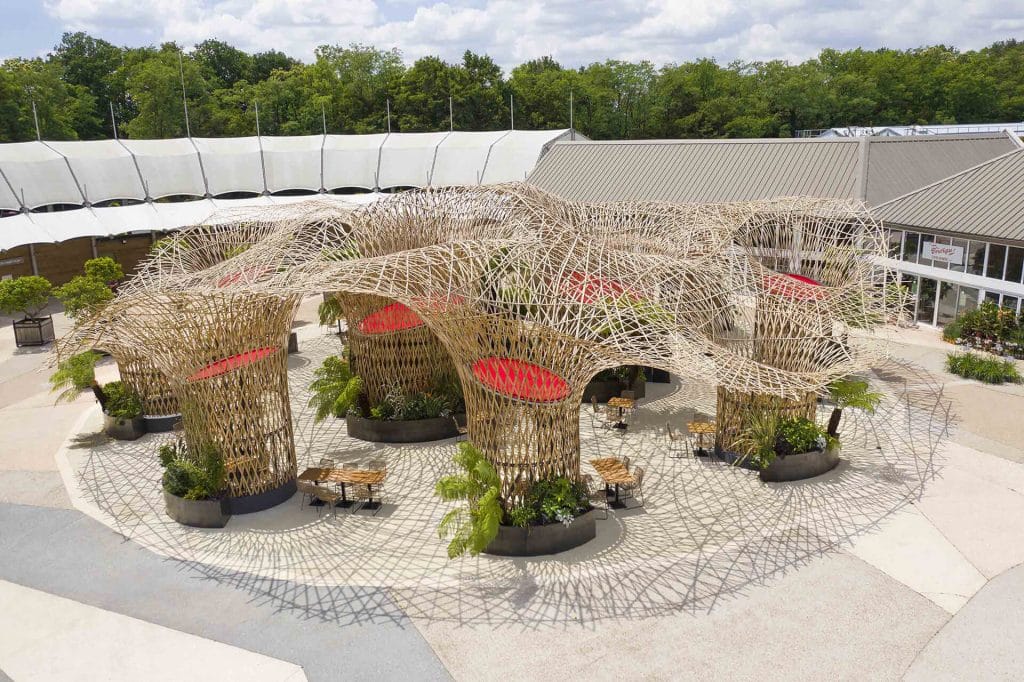
Case Study: The Bamboo Pavilion in Beijing, constructed for the 2019 International Horticultural Exhibition, features engineered bamboo products that demonstrate the material’s aesthetic versatility and structural capabilities.
3D Printing and Prefabrication Techniques
Innovative construction methods, including 3D printing and prefabricated bamboo panels, are simplifying the building process. Prefabrication reduces construction waste and speeds up project timelines, while 3D printing offers precision and design flexibility. These technologies make sustainable bamboo architecture more accessible and efficient, fostering broader adoption across the industry.
Example: Companies like Vernacular Studio in India are utilizing 3D printing technology to create intricate bamboo structures, pushing the boundaries of design and sustainability.
The Future of Sustainable Bamboo Architecture
The trajectory of sustainable bamboo architecture is poised for growth as the demand for eco-friendly building solutions increases. The future will likely see:
- Stronger International Collaboration: Cross-border partnerships between countries rich in bamboo resources and nations investing in sustainable construction can strengthen supply chains and improve material quality.
- Expanded Use in Urban Design: Bamboo’s versatility lends itself well to biophilic design principles that prioritize natural elements in city planning. Sustainable bamboo architecture will likely play a key role in green urban infrastructure projects, such as parks, community centers, and eco-villages.
- Greater Investment in Research: Ongoing research into bamboo’s properties and potential improvements will further elevate its status as a leading sustainable material. Universities and research institutions are exploring genetic enhancements of bamboo species to increase growth rates and disease resistance.
About our product: Bamboo poles
Conclusion
Sustainable bamboo architecture is more than just an alternative; it’s a necessary shift towards environmentally responsible building practices. With its numerous benefits, from rapid renewability to carbon sequestration, bamboo stands out as a beacon of hope in the quest for sustainable construction. By overcoming challenges and embracing technological innovations, we can harness the full potential of bamboo to build a greener, more sustainable future.
Tel: +84 338 286 268
Email: [email protected]
Facebook: Bamboo Supplier